
Summary: Small businesses are the #1 ransomware target right now because attackers have done the math: smaller companies hold valuable data, run weaker defenses, and pay quickly. In 2025, ransomware was involved in 88% of SMB breaches.
Phoenix Small Businesses Are in the Crosshairs
Small businesses are the #1 ransomware target right now because attackers have done the math: smaller companies hold valuable data, run weaker defenses, and are more likely to pay quickly to get back online. It's no longer true that you're "too small to bother with" — the opposite is the case. In 2025, ransomware was involved in 88% of all breaches affecting small and midsize businesses, compared with 39% for larger organizations. If you run a Phoenix small business, you are squarely in the crosshairs.
The good news is that ransomware is largely preventable with the right defenses in place. Liquid IT protects Phoenix-area businesses with layered security, 24/7 monitoring, tested backups, and a 15-minute average response time — and we've maintained zero successful breaches across all managed clients.
Why are attackers targeting small businesses specifically?
Because the economics favor them. Large enterprises have security teams, big budgets, and hardened systems. Small businesses often have none of that, yet they still hold customer data, payment information, and operational systems worth holding hostage. Attackers using ransomware-as-a-service can automate attacks across thousands of small targets cheaply, knowing many will have an unpatched system or a reused password somewhere.
The numbers tell the story plainly. Research shows small and midsize businesses are now targeted far more often than larger organizations — by some measures more than twice as frequently. Attackers also know small businesses feel intense pressure to restore operations fast and are therefore more likely to pay.
What does a ransomware attack actually cost?
Far more than the ransom itself. The real damage is downtime, recovery, lost customers, and reputational harm. Industry research puts the average ransomware-related downtime at around 24 days — think about what nearly a month without your systems would do to your cash flow and your clients. Excluding the ransom payment, average recovery costs run into the hundreds of thousands of dollars even for smaller organizations.
And paying doesn't make the problem go away. Roughly 69% of businesses that paid a ransom were attacked again — once attackers know you'll pay, you go on a list. A large share of small businesses say an attack in the low six figures could put them out of business entirely.
How do these attacks usually get in?
Most ransomware enters through unglamorous, preventable gaps:
- Phishing emails. An employee clicks a link or opens an attachment, handing over credentials or installing malware. This remains the most common entry point.
- Stolen or reused passwords. Without multi-factor authentication, one leaked password can open the door.
- Unpatched systems. Software with known vulnerabilities that never got updated is an open invitation.
- Compromised vendors. A growing share of attacks come in through a third party that has access to your systems.
The pattern: most attacks exploit basic hygiene failures, not exotic hacking. That's also the encouraging part — basic defenses block the majority of them.
What actually stops ransomware?
A layered approach, where no single failure is catastrophic:
- Employee training. Since most attacks start with a click, teaching staff to recognize phishing is your highest-return defense.
- Multi-factor authentication everywhere. MFA neutralizes the majority of password-based attacks on its own.
- Patching and updates. Closing known vulnerabilities promptly removes the easiest entry points.
- Tested, isolated backups. If you can restore clean data quickly, ransomware loses its leverage — but only if backups are verified and tested.
- 24/7 monitoring and fast response. The faster an intrusion is detected and contained, the smaller the damage.
Liquid IT builds all five into a single managed defense for Phoenix businesses, combining layered security and continuous monitoring with a 15-minute average response so threats are caught and contained early.
The Bottom Line
Phoenix small businesses are the top ransomware target because attackers see easy access and a fast payday. But the same attacks that devastate an unprepared business are largely stopped by fundamentals: training, MFA, patching, tested backups, and fast monitoring. The question isn't whether your business is a target — it is — but whether your defenses are ready before the attack comes, not after.
Want to know where your gaps are? Book a 15-minute call with Liquid IT for a security review.
Cybersecurity is a sensitive and high-stakes topic. If your business is currently experiencing an active attack, contact a security professional immediately.
Related Services
Frequently Asked Questions
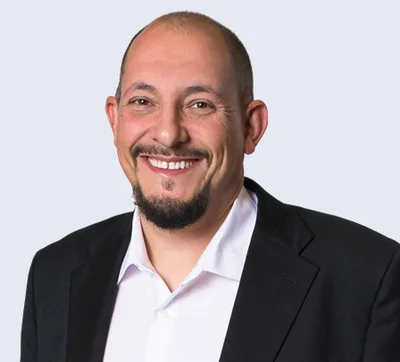
Josh Jalowiec
Founder & CEO, Liquid IT
Josh Jalowiec is the founder and CEO of Liquid IT. With over 30 years of experience in enterprise IT, he helps Arizona businesses build secure, efficient technology infrastructure that drives growth.